

Hawaii is not one compact destination that can be explored from the same hotel. These five landscapes are spread across four islands to help you choose, not to insist that you see them all. The most important decision comes before booking activities: how much time you can give each island and what kind of experience you want.
Access arrangements are part of choosing an island. On Kauaʻi, check Nāpali and Waimea Canyon notices separately; on Maui, decide whether a Haleakalā sunrise matters to you; on the island of Hawaiʻi, consult volcanic activity and authorised areas within the national park. Resolving these differences before booking transfers helps you build a trip that makes good use of the available time.
Before you pack
- Islands
- Oʻahu, Hawaiʻi, Maui and Kauaʻi
- Suggested approach
- Choose fewer islands and allow flexible days
- Before booking
- Check permits, notices and cancellation conditions
1. Diamond Head: a different perspective on Oʻahu
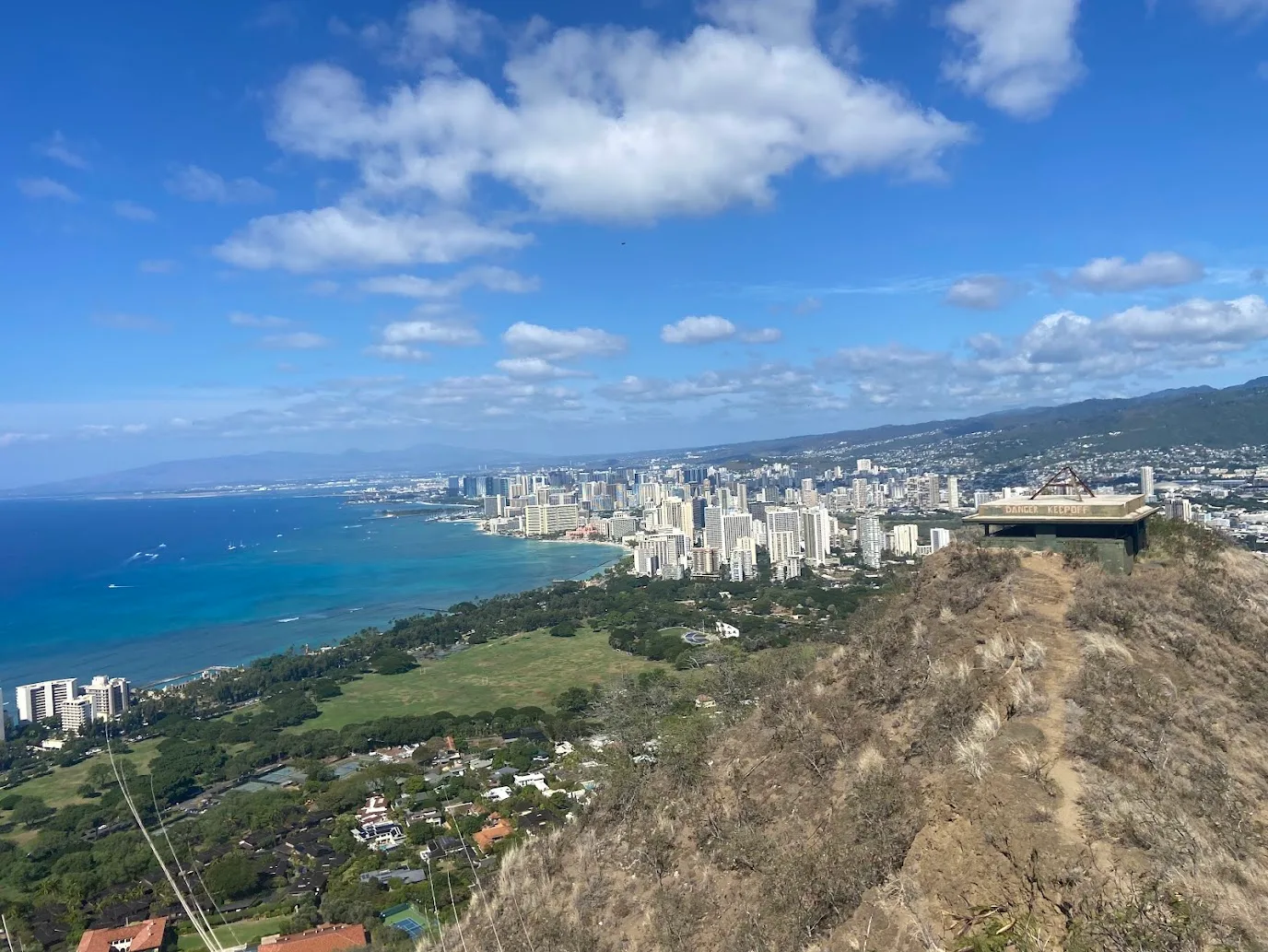
Diamond Head, also called Lēʻahi, is one of Oʻahu’s most recognisable landmarks. A visit connects the volcanic landscape with the urban waterfront of Honolulu and Waikīkī. From above, the coast becomes easier to understand as one continuous setting rather than a sequence of unrelated beach stops. The attraction is this perspective, not the idea that every traveller must complete a climb to have visited the island properly.
Plan through the official Diamond Head State Monument information. Check reservations, admission rules and notices before fixing the rest of the day. Apparent proximity to Waikīkī does not mean the route suits every visitor: assess the walk and the needs of your companions. If it does not match their mobility or energy, choose another coastal experience. The cover photograph shows the view towards Waikīkī; it is not evidence of access conditions on your travel date.
2. Hawaiʻi Volcanoes National Park: a changing landscape
This park is on the island of Hawaiʻi, not Oʻahu or Maui. Planning begins with an important distinction: a volcanic landscape is dynamic. The National Park Service provides separate information about current conditions, eruption viewing, trails and transport. A spectacular photograph of flowing lava is therefore not a promise of what your trip will include, and it is never a reason to approach a closed area.
Build your visit around official maps and notices, prioritising authorised overlooks and routes that match your experience. NPS identifies possible congestion and parking constraints around places such as the Kīlauea summit and Nāhuku, so keep alternatives available. Download official information rather than relying entirely on mobile coverage. Stay on designated trails and do not attempt your own approach to gases, unstable edges or restricted volcanic areas. Uncertainty belongs in the planning process; it should not be solved by improvising access on the ground.
3. Haleakalā: Maui on a different scale
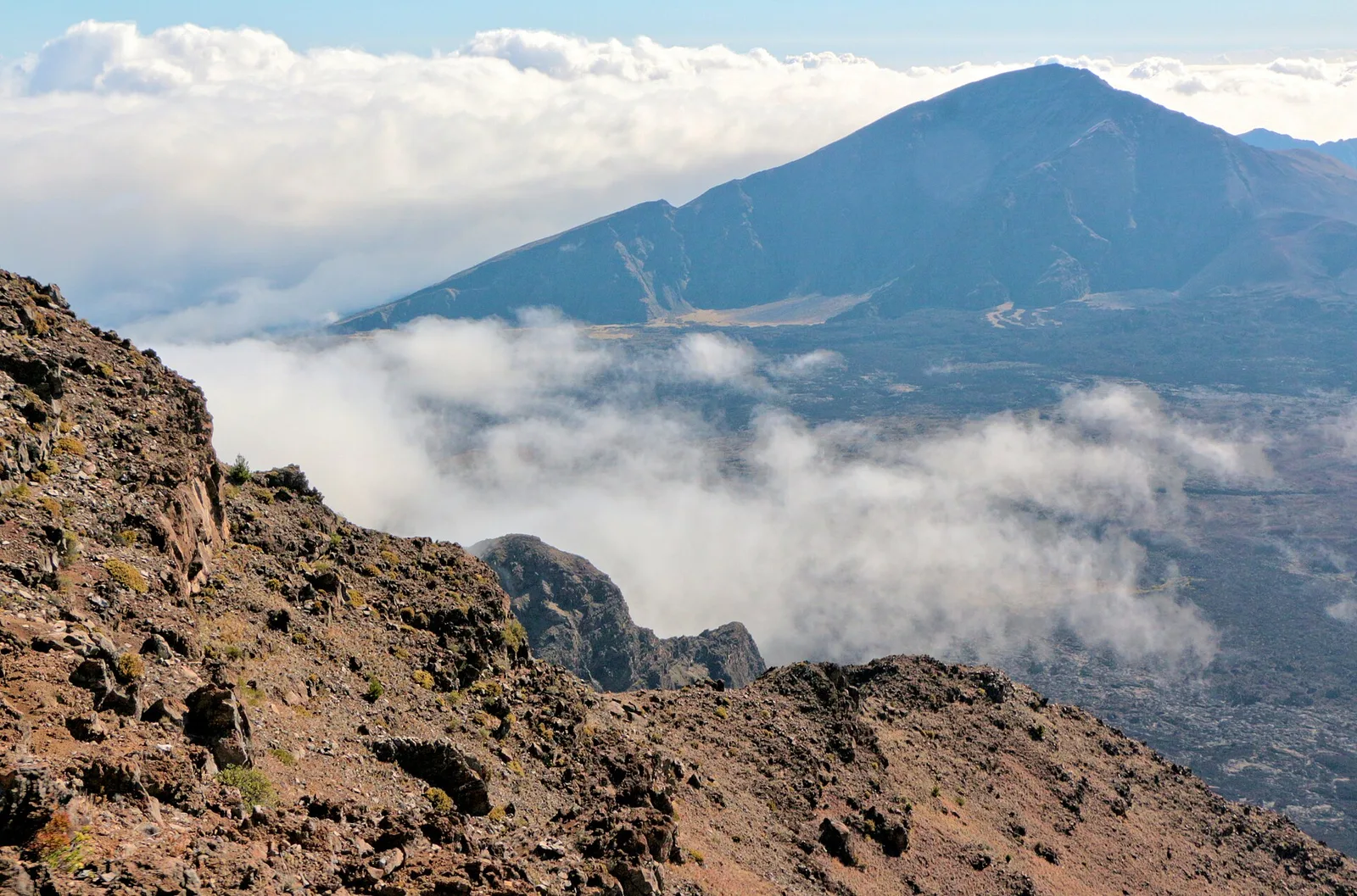
Haleakalā offers a view of Maui through its high volcanic landscape. The national park also contains coastal and rainforest environments, but that variety does not mean everything fits into one short outing. Distinguish the area you want to explore from the route that actually connects it with your accommodation. Places that seem close on a small island map may require substantially different journeys.
The National Park Service website provides specific guidance on sunrise reservations. If sunrise is your priority, check the current procedure before committing to other arrangements. You can also appreciate the landscape without treating that particular moment as compulsory. Consult the forecast and official advice for the part of the park you intend to visit; preparing for a beach day does not automatically prepare you for the summit. For hiking, select a route suitable for the entire group instead of choosing an ambitious distance from photographs alone.

4. The Nāpali Coast: choose your viewpoint
The Nāpali Coast occupies the north shore of Kauaʻi, with cliffs, ridges and valleys facing the Pacific. Hawaiʻi’s tourism authority describes sea and air experiences as ways to appreciate this terrain. The practical decision is to choose a perspective that fits your interests and circumstances, rather than assume that a coastal road connects all the viewpoints seen in travel photographs.
Compare each excursion’s departure point, duration and conditions carefully. A boat trip does not necessarily include landing on a beach, and an aerial excursion is a different experience from walking. Weather can alter or cancel activities, so preserve flexibility and understand the operator’s policy. If you want to add hiking, consult State Parks permits and closures separately. Booking another activity on the island does not provide automatic permission to enter protected land or use a trail, even when they appear close together on a map.
5. Waimea Canyon: start with authorised overlooks
Waimea Canyon State Park on Kauaʻi introduces colours and landforms that differ dramatically from the coast. The official page distinguishes the scenic drive and overlooks from hiking opportunities, including long and strenuous routes in the surrounding area. For a first visit, that distinction matters more than collecting distance: seeing the canyon from an authorised viewpoint can be a complete experience in its own right.
When researching this guide, we found official notices about partial reopenings and closures on Kauaʻi. Do not interpret one overlook being open as permission to continue along every road, trail or neighbouring park. Check conditions for the day and have an alternative if your chosen place is unavailable. Anyone planning a hike should assess length, difficulty and current conditions with the park authority. A relatively easy descent does not imply an equally easy return, so make choices for the real abilities of your whole group.
Choose islands before building a checklist
These five places are spread across Oʻahu, the island of Hawaiʻi, Maui and Kauaʻi. They do not form a continuous driving route. Visiting all of them involves inter-island travel, accommodation changes and repeated arrivals; transfer time deserves an explicit place in both the schedule and budget. On a short first trip, selecting one or two islands may create a more satisfying experience than trying to reproduce the entire list.
Let priorities guide the decision. Oʻahu combines a distinctive landscape with an urban setting; the island of Hawaiʻi offers its volcanic national park; Maui supports a focused Haleakalā outing; and Kauaʻi contains both Nāpali and Waimea Canyon, with separate operating conditions. Book activities that need confirmation first and keep flexible space around them. Avoid tight onward connections based on an assumption that an excursion will finish at an exact minute.
A route to get you started
- If Oʻahu is your first base, organise Diamond Head as a specific outing and leave the rest of the day flexible for the urban or coastal surroundings. Do not add a flight simply to check another attraction off this list. First compare the experience you would gain with the actual time consumed by connections and new arrivals.
- If you choose Maui or the island of Hawaiʻi, set aside a day focused on that island’s national park and prepare an alternative plan. These are not interchangeable versions of one landscape. On Kauaʻi, treat Nāpali and Waimea Canyon as separate decisions: favourable conditions for one activity do not guarantee suitable conditions for the other.
Good to know
Can all five places be visited on one island?
No. They are spread across four different islands. An itinerary combining them requires inter-island transport and changes of base. This selection helps you compare priorities; it should not be treated as a circular day trip you can drive from a single hotel.
Is visible lava guaranteed at Hawaiʻi Volcanoes?
No. Volcanic activity and permitted viewing areas change. Consult the official park status and NPS viewing guidance. A photograph, an older travel article or a third-party advertisement should never be treated as permission to approach a closed area.
Do these experiences need advance reservations?
Some experiences and access arrangements use specific procedures, including Haleakalā sunrise and Diamond Head entry. Check the official system for each place you choose. Booking an excursion does not replace other permits or prevent an authority from closing an access point when conditions require it.
Thoughtful planning begins by recognising Hawaii’s differences: several islands, distinct landscapes and access arrangements that need individual attention. Reduce unnecessary transfers, confirm essential reservations and preserve room for changes. A well-planned day in an open place that suits your group is more valuable than racing to complete an entire list.