

Bangkok changes scale constantly: a morning can begin beside a temple tower, continue among murals and end with views from the river. Enjoying that contrast means grouping visits by area and allowing space for journeys. Distance on a map alone does not make a workable day.
These ten places combine the historic centre with museums, current art, a market and two distinctly different parks. Choose according to your interests and spread the visits across several days. The suggested routes leave room to pause, eat and adapt the plan to the time you actually have.
Before you pack
- Country
- Thailand
- Areas
- Rattanakosin, river, Rama 1 and parks
- Suggested pace
- Three or four days
1. Grand Palace and Wat Phra Kaew
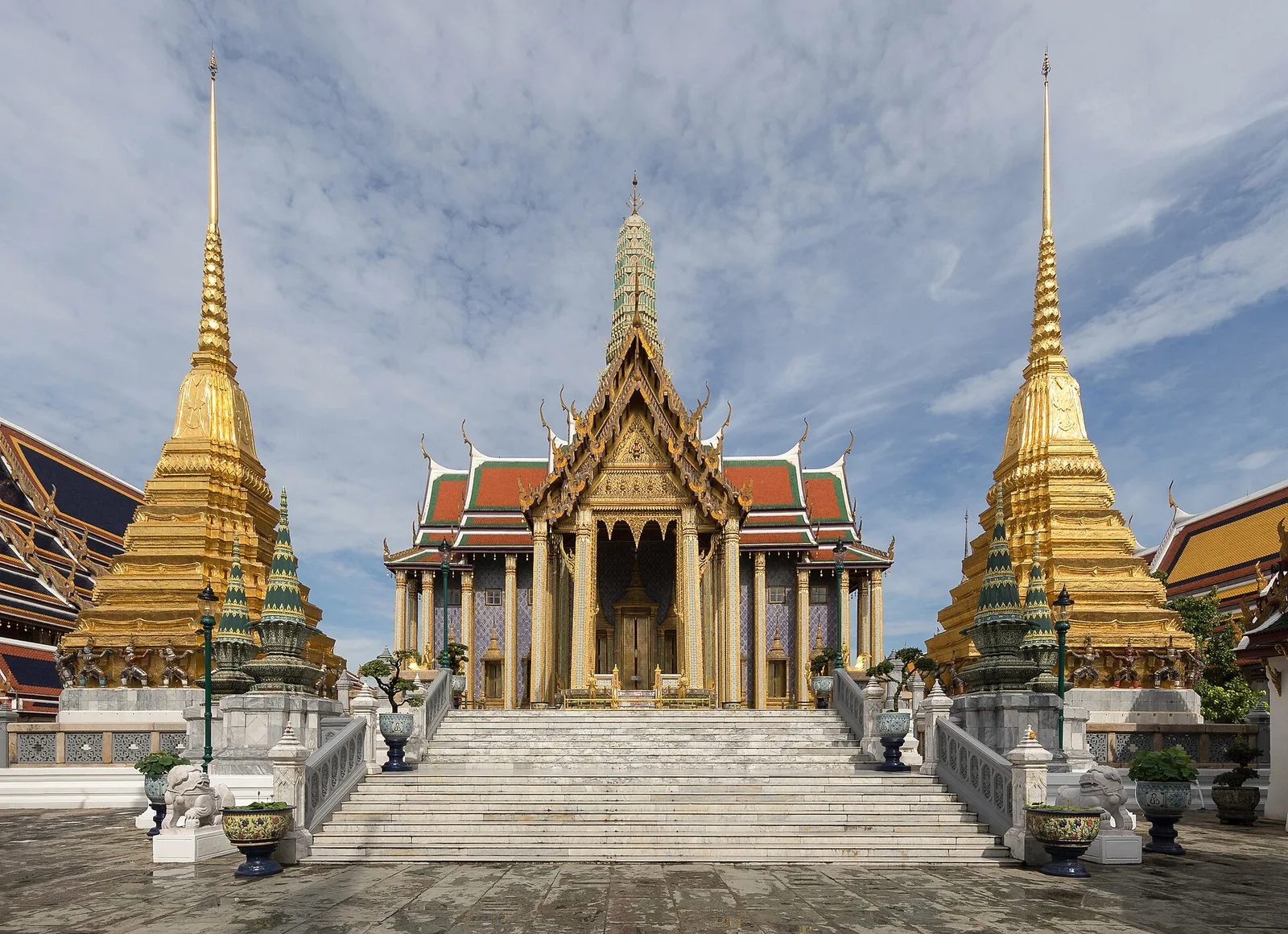
The Grand Palace in Rattanakosin combines ceremonial buildings with Wat Phra Kaew, the Temple of the Emerald Buddha. It introduces the scale and visual language of Thai royal architecture: layered roofs, decorated surfaces and courtyards connecting different spaces. Choose a few details to examine slowly instead of trying to record the whole complex as soon as you enter.
Plan clothing before leaving your accommodation: the complex applies specific rules, and lightweight clothing is not necessarily acceptable clothing. Check the official calendar for ceremonies or closures as well. The palace’s visitor information describes river access and MRT Sanam Chai station. Confirm the final walking route and leave room for entrance checks rather than scheduling another timed visit immediately afterwards.
2. Wat Pho and the Reclining Buddha
Wat Pho deserves time beyond the familiar image of its Reclining Buddha. The hall containing the statue includes murals with Buddhist narratives; looking at them gives the visit more substance than a photograph of the sculpture alone. The contrast between the Buddha’s scale and the building’s smaller details invites you to look from different permitted positions.
You can combine it with the Grand Palace and Museum Siam during a day in the historic centre, without assuming three substantial interiors fit comfortably before lunch. Follow instructions about footwear and prayer areas. With children, choose a couple of mural details to look for together. The visit becomes more engaging when everyone has a specific reason to pause and observe.
3. Wat Arun on the Thon Buri bank
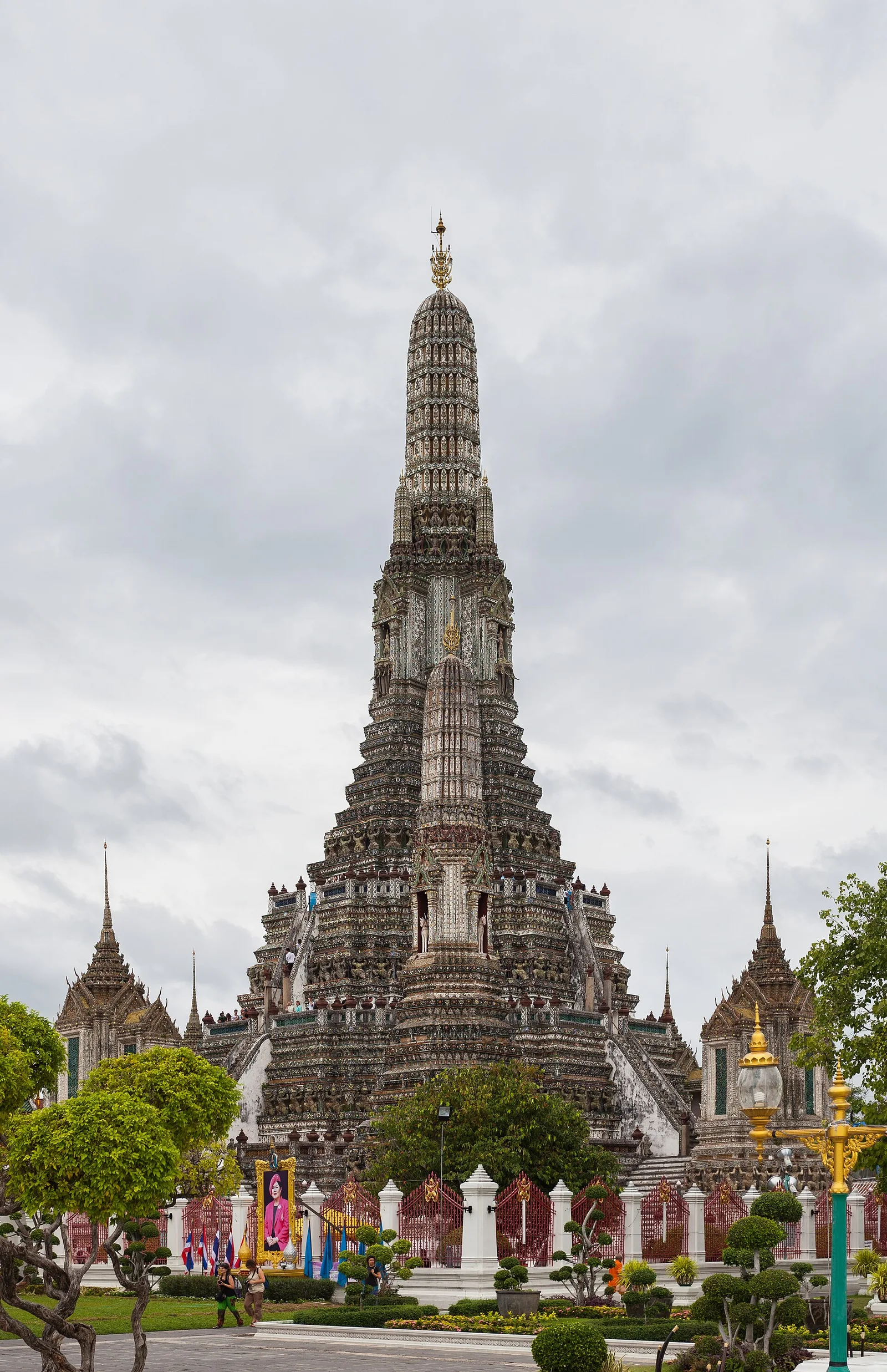
Wat Arun stands on Arun Amarin Road on the Thon Buri bank of the Chao Phraya, opposite Wat Pho. Its large tower, or prang, makes a very different silhouette from the Grand Palace roofs. As you approach, compare the shape recognised from the river with the decoration that becomes visible on the temple’s surfaces.
Its position across the water makes the crossing part of your route planning. Check the current pier and service, and distinguish a cross-river ferry from a boat travelling along the river. Within the grounds, stay in authorised areas and do not assume every level of the tower is open. Looking at the whole complex from farther away is also worthwhile for understanding its proportions.

4. Museum Siam: exploring Thai identity
Museum Siam focuses on culture and ways of interpreting Thai identity. Its Decoding Thainess exhibition addresses beliefs, traditions and other cultural expressions through learning activities. It complements the temples: after seeing buildings and ceremonies, you can ask more questions about the practices and symbols encountered in them.
MRT Sanam Chai appears in the museum’s travel information, making it convenient to include in the historic-area itinerary. Check the languages and resources available for the exhibition you want to see, especially when travelling with children. Allow time to read and take part where permitted; hurrying through every room may offer less than exploring a few subjects that particularly catch your attention.
5. Jim Thompson House: home and collection
The Jim Thompson House Museum preserves his Bangkok home and a collection of Asian art. On Soi Kasemsan 2 near Rama 1 Road, it offers a more domestic scale after the major ceremonial compounds. The relationship between objects, living spaces and the collector’s story encourages a visit focused on details.
The museum states that entry to the main house requires a guide. Check available languages and current booking arrangements; do not assume a tour exists in your preferred language. Resolve that before purchasing if it is important to your experience. The art centre in the same compound has its own programme, so distinguish the two offerings and decide how much time to give each.
6. BACC: a window into contemporary art
The Bangkok Art and Culture Centre adds an institution devoted to current art and culture to the route. Exhibitions and activities change, so choose your visit around the current programme instead of expecting a particular work seen in an old photograph. It broadens the view of Bangkok beyond religious architecture.
BTS National Stadium is the access point advertised by the centre. You can pair it with the Jim Thompson House, while leaving a separate time allowance for each. Check which exhibitions are open and whether special activities have different conditions. If time is limited, choose one exhibition and give its rooms proper attention; the number of floors visited does not determine how much you learn.
7. Chatuchak: explore the market by section
Chatuchak is known for its weekend market, with sections selling clothing, objects, art and food. Variety is part of its appeal, but trying to cover everything can distract from what you actually want to find. Choose two or three kinds of goods as a starting point; that gives the walk a purpose and leaves time to look closely at individual stalls.
Check which sections operate on your chosen day, since a weekend market does not offer the same experience throughout the week. Save a meeting point and the name of your exit. Before buying, check materials, dimensions and transport requirements, particularly for fragile objects. Avoid wildlife or items whose provenance and export conditions you cannot establish.
8. Lumphini: a pause in the park
Lumphini provides a green pause in a city of intense sightseeing routes. Paths, water and everyday recreation reveal another Bangkok rhythm. Its appeal lies in walking without a monumental target and resting your attention after museums or temples. You do not need to add an organised activity for the stop to feel worthwhile.
Municipal information lists MRT Silom and Lumphini as access options. Choose an entrance according to your planned walk and onward journey. Check weather and air quality before scheduling prolonged outdoor exercise. Share paths with people training and respect signs: an urban park has its own rules for activities and circulation, even when the atmosphere feels informal.
9. Benjakitti: wetlands in the city
Benjakitti in Khlong Toei offers a park designed around wetlands and urban forest. Walkways and nature routes give changing perspectives on vegetation and the built skyline. Compare its design with Lumphini rather than treating the two as interchangeable stops: landscape infrastructure is a central part of the experience here.
Check the map for the entrance serving the section you want to explore. A short walk on designated paths may be enough if you arrive tired; completing every circuit is unnecessary. Bring sun protection and keep walkways clear when photographing. The municipal website distinguishes different activities and facilities, so confirm conditions if you plan to use the park for sport.
10. Chao Phraya: seeing Bangkok from the water
The Chao Phraya can serve as a journey between visits and an experience in its own right. From a boat, the banks relate differently: temples, piers and buildings become part of a moving corridor. For a first visit, a simple trip with clearly chosen boarding and landing points is usually easier to manage than improvising several boat changes.
Chao Phraya Express publishes colour-coded lines with different routes and operating days. Consult the current map and pier notices because boats do not all stop at the same places. Confirm direction before boarding and keep your return information available. Regular river services and sightseeing boats may use different tickets and conditions, so identify the service you actually intend to take.
How to organise your visits
Separate the historic area and river from the Rama 1 Road corridor and the parks. Choose accommodation with its transport connections in mind, not just the distance drawn to a monument. Give each day one main visit and an indoor alternative. If rain arrives, an exhibition may make a better afternoon than repeated transfers to preserve a rigid plan.
The best timing depends on your activities: save longer walks for suitable weather and check the forecast close to departure. On hot days, build in water and rest; for parks, also review air-quality notices. Check weekly museum closures and ceremonial dates before setting your route. The linked official sources help answer these specific planning questions.
A route to get you started
- Day 1: make the Grand Palace and Wat Pho your main visits. Add Museum Siam if it is open and you have time. This keeps the historic route concentrated and leaves Wat Arun for a less hurried river outing.
- Day 2: combine Wat Arun with a planned Chao Phraya journey. Choose piers and confirm your return before boarding. A pause in Lumphini can finish the day if outdoor conditions are suitable.
- Day 3: spend time at the Jim Thompson House and BACC. Schedule Chatuchak on a day compatible with its weekend activity. Benjakitti can fill another afternoon; both parks need not be added to an already busy day.
Good to know
What clothing do I need for the temples?
Read each site’s rules. The Grand Palace publishes detailed restrictions on sleeveless clothing, shorts and other garments. Bring an appropriate outfit from your accommodation rather than relying on arrangements at the entrance.
Do all river boats use the same ticket?
Do not assume so. Identify the operator and service type along with the pier and direction. Regular lines, cross-river services and sightseeing boats may have different arrangements.
What should I choose with only two days?
Devote one day to two historic-area visits and the other to the river or the Rama 1 museums. Choose by interest: adding every place would leave too little time to experience any of them properly.
Bangkok is most rewarding when each journey has a purpose and each visit has time of its own. Alternate temple splendour with an exhibition, the market or a walk by the water. A route with pauses makes the differences clearer and leaves you with more than a sequence of monuments.