

Rome is not best understood as a collection of isolated monuments. A single walk can connect the remains of ancient public life, Baroque squares, churches and streets where everyday neighbourhood life continues. This guide therefore offers ten places and a way to combine them: group areas together, distinguish booked visits from walks and allow time to rest.
The selection is intended for a first visit spread across several days. Some stops need an interior visit to be fully appreciated, while others work well as walks. Always check the admission type and access conditions for the place you choose. Confirm current prices and hours before booking, paying particular attention to which parts of a site each admission option includes.
Before you pack
- Suggested structure
- Separate ancient Rome, central squares and neighbourhoods beside the Tiber.
- Pace
- One major interior visit per half-day leaves room for walking.
- Day bag
- Comfortable footwear, weather protection and a bag that meets each monument’s rules.
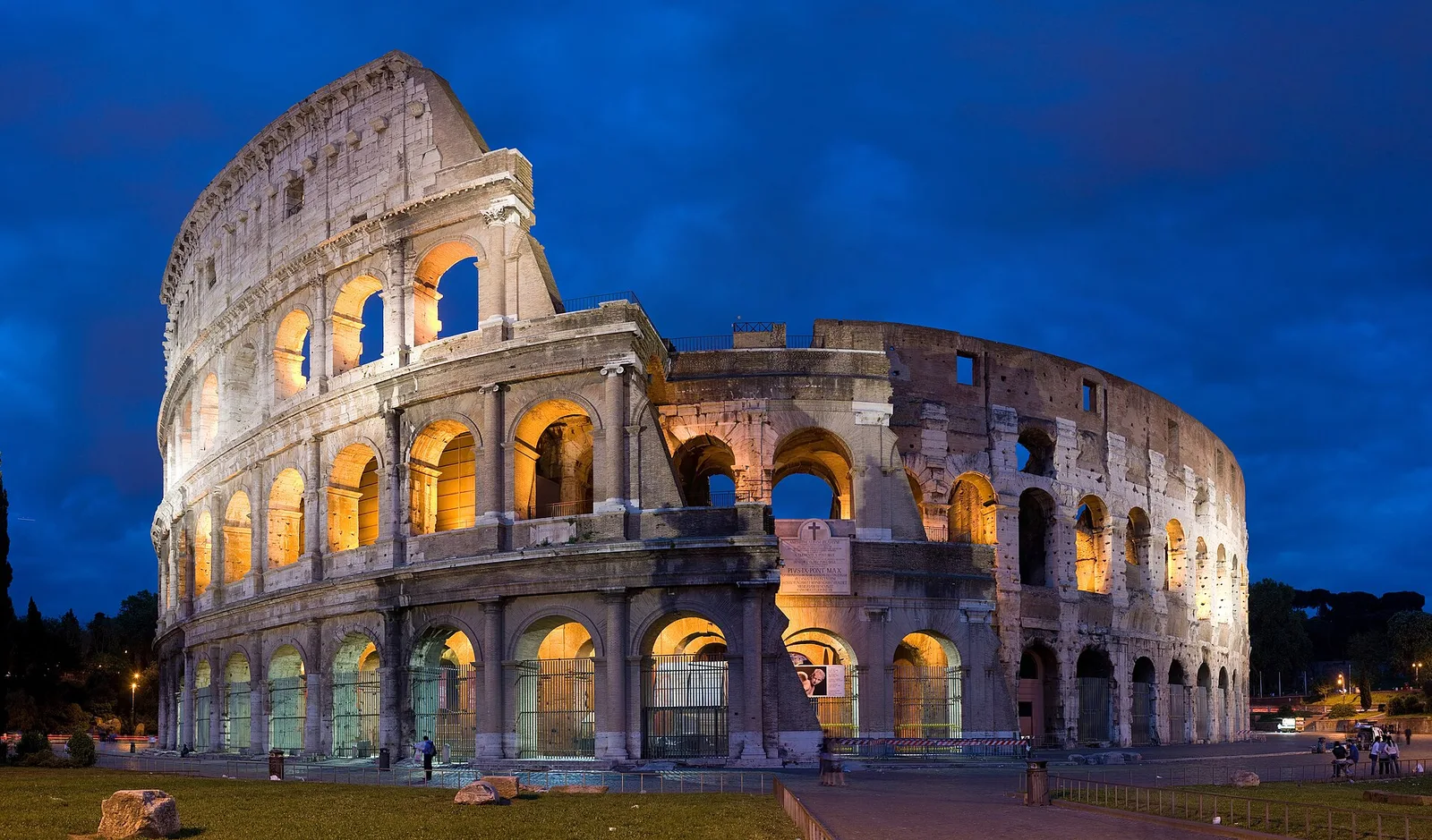
1. The Colosseum
The Colosseum is a powerful introduction to the scale of ancient Rome, but seeing the exterior and exploring inside serve different interests. Outside, you can appreciate its mass and its relationship with the archaeological district; inside, the route helps explain a building designed for spectacle. The tourist office also calls it the Flavian Amphitheatre, a name you may encounter while planning.
Examine official admission options before paying: different tickets and guided visits do not necessarily include the same areas. Use the public transport planner linked by Turismo Roma, and check your assigned entrance rather than just the monument’s name. Avoid another tightly timed booking immediately afterwards, since entry checks and the site itself deserve some breathing room.
2. Roman Forum and Palatine
The Roman Forum helps explain where political, religious and commercial activity took place in the ancient city. The municipal source describes a space transformed over centuries, so it should not be imagined as a complex built all at once. The Palatine adds another perspective and helps relate the remains to Rome’s terrain.
Bring a map or choose an interpretation resource that helps identify buildings; without context, ruins can become a succession of stones that are difficult to read. Alternate close observation with breaks, and consider uneven surfaces when choosing footwear and a route. Confirm which areas your admission covers rather than assuming that every nearby archaeological space is interchangeable.
3. The Pantheon
At the Pantheon, the central experience is spatial: enter, look at the dome and observe how the oculus brings light into the interior. Turismo Roma specifically highlights the relationship between the building’s dimensions and this central opening. You do not need to memorise measurements to appreciate it; take time to look upwards and then examine the whole interior from different positions.
Include it within a walk through the centre rather than making a separate journey. Check official access conditions and remember that it is also a place of worship. The square outside has its own interest, but does not replace the interior for architecture enthusiasts. If admission does not fit your day, rearrange another stop instead of rushing everything.
4. Trevi Fountain
Trevi Fountain is best read as a composition combining water, sculpture and an architectural backdrop. The tourist office explains that Nicola Salvi’s design was selected and identifies the central figure as Oceanus. With that reference, it becomes easier to look beyond the familiar photograph and notice how the different elements work together.
Approach it as part of a central walking route and find somewhere to observe without obstructing circulation. The fountain and surrounding area may have specific access rules, so check current notices and follow the signs. Do not base your itinerary on a promise that it will be empty: allow patience and an alternative if you prefer a quieter stop.
5. Piazza di Spagna
Piazza di Spagna brings together a recognisable square, its celebrated staircase and the Barcaccia fountain. Turismo Roma emphasises the relationship between the surrounding facades, fountain and overall perspective. It is a useful stop for examining how urban space is organised rather than simply repeating a familiar photograph from one position.
Connect it with other central squares, while allowing for changes in level if you continue uphill. Respect posted rules governing use of the staircase and choose another place for a longer rest when necessary. The nearby shopping streets can occupy as much time as you wish, so decide whether your day is primarily about architecture, shopping or simply walking.
6. Piazza Navona
Piazza Navona offers one of the most distinctive urban ensembles of Baroque Rome. Municipal information connects its outline with the ancient Stadium of Domitian, a useful clue to understanding its elongated shape. Look at the entire space first, then its fountains and buildings, rather than heading straight to the busiest photographic spot.
It works well within a route that includes the Pantheon. Their proximity allows an imposing interior to alternate with an open-air walk without repeated long journeys. If you decide to eat nearby, read the menu before sitting down and choose according to your preferences rather than the view alone. Enjoying the square does not require purchasing something at every stop.
7. Capitoline Museums and the Campidoglio
The Capitoline Museums add context to the archaeological areas: objects displayed in a museum help connect buildings, symbols and forms of representation. Turismo Roma includes them in its Colosseum, Forum and Palatine district itinerary. Their setting also offers a way to look at the city from the hill, keeping the museum connected to the surrounding urban landscape.
Choose between an extended museum visit and exploring the setting outside, without treating those experiences as equivalent. If entering, allow time for the collections that most interest you and check open galleries and admission conditions. The thematic link makes it a sensible companion to the Forum, but moving it to another day can be wiser if you are already tired.
8. Villa Borghese
Villa Borghese is one of the green spaces Turismo Roma recommends for balancing the city’s monumental heritage. Include the park when you need a day less dominated by interiors, or when your group would appreciate a generous break between cultural visits. A garden’s value does not depend on covering all of it: choose an area and allow yourself to stay there.
Distinguish clearly between walking in the gardens and visiting a museum or joining an activity within the wider area. Each experience may have separate conditions and reservations. Consult a map before arriving so your entrance fits the next part of your route. If the weather is uncomfortable, change the order of the day rather than turning a rest into another obstacle.
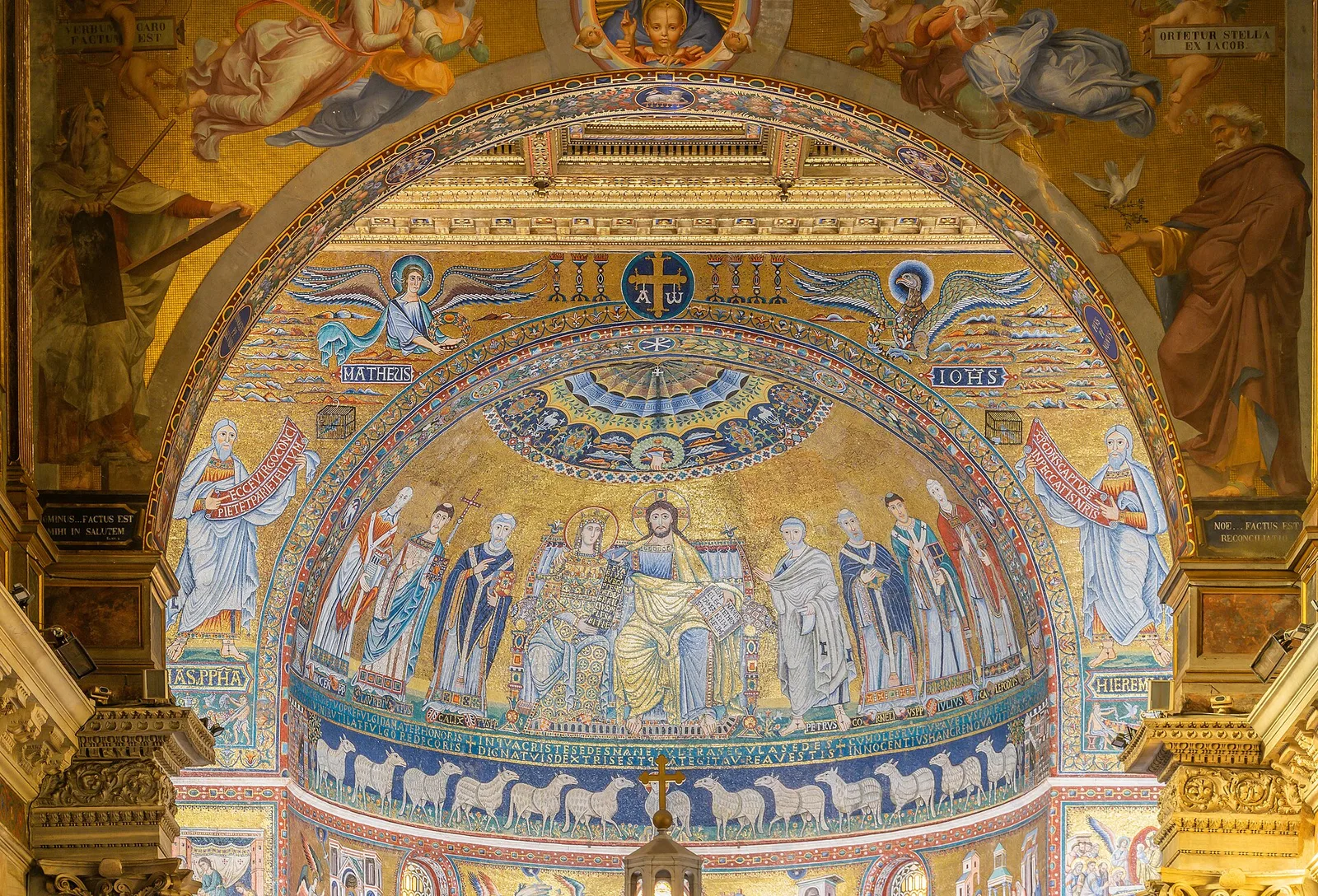
9. Trastevere and Santa Maria
Trastevere reveals a different scale of Rome through streets and squares best explored with some freedom. Municipal information identifies Piazza Santa Maria and its basilica as useful landmarks. Starting there helps with orientation, but the walk becomes more rewarding when it is not solely about reaching a restaurant or reproducing a popular photograph.
If you enter Santa Maria, notice the decoration while respecting its religious purpose; the interior image in this guide shows its apse. Afterwards, continue through nearby streets without imposing an excessively long route. Before choosing dinner, check menus and availability. A neighbourhood known for its atmosphere is also home to residents, so keep noise considerate and entrances clear.

10. Tiber Island
Tiber Island is a reminder that the river also shapes the experience of Rome. Turismo Roma includes it within the same walking area as Trastevere and Testaccio, so it can act as a transition between routes rather than a separate excursion. Look at the water, bridges and relationship between the banks to shift your perspective away from individual monuments.
It makes a useful short stop when your itinerary already passes the river. Use a map to decide where to continue, without assuming that all riverside paths have identical access conditions. If time is limited, prioritise continuity in the walk instead of adding distant monuments. The value of this stop lies precisely in helping connect different parts of the city.
A route to get you started
- Archaeology day: prioritise the Colosseum and Forum-Palatine complex. Check what each ticket includes and save the Capitoline Museums for another occasion if you need a rest.
- Squares day: connect Piazza Navona, the Pantheon, Trevi and Piazza di Spagna with breaks for food and observation. Not every stop needs a booking; part of the appeal lies in walking between them.
- Flexible day: devote one block to Villa Borghese and another to the Tiber, its island and Trastevere. The order depends on your accommodation and the weather; you do not need to cover every stop in a single outing.
Good to know
Do I need a guided tour to understand the Forum?
A guide is not compulsory for this suggested route, but an interpretive map, audio guide or guided visit can add valuable context. Choose the format according to your interests and check which areas it covers before booking.
Can I explore all of Rome on foot?
Many central visits can be grouped into walks, but that possibility should not become an obligation. Check distances and mobility needs, and use public transport whenever it preserves energy for the visits that matter most to you.
How can I avoid buying the wrong ticket?
Check the operator, date, access type, assigned entrance and amendment conditions. A single monument may offer several different products. Begin with official tourism links to identify the appropriate provider before paying.
Rome rewards a combination of context and flexibility. Give an archaeological complex proper attention, explore the squares without rushing and allow time for a riverside neighbourhood. Use the municipal sources to confirm access and build your own route: a thoughtful selection from these ten places is more useful than a checklist completed at full speed.