

Seoul is easier to understand when you give each part of the city a purpose. Palace courtyards, inhabited hanok streets, hilltop views and modern interiors tell different stories; moving between them takes more time than a short list suggests. This selection of ten places is designed for a first visit with room to notice those differences.
Allow roughly four or five days if you want substantial visits to the whole selection, and choose fewer stops if your stay is shorter. The itineraries below are editorial suggestions, not fixed tours. Official sources underpin the historical and visitor information; check current booking conditions, closures and weather before finalising your plans.
Before you pack
- Country
- South Korea
- Suggested stay
- Four or five days for the full selection
- Organisation
- Historic centre, Namsan/Yongsan and Gangnam/Jamsil
1. Gyeongbokgung: understanding the royal capital
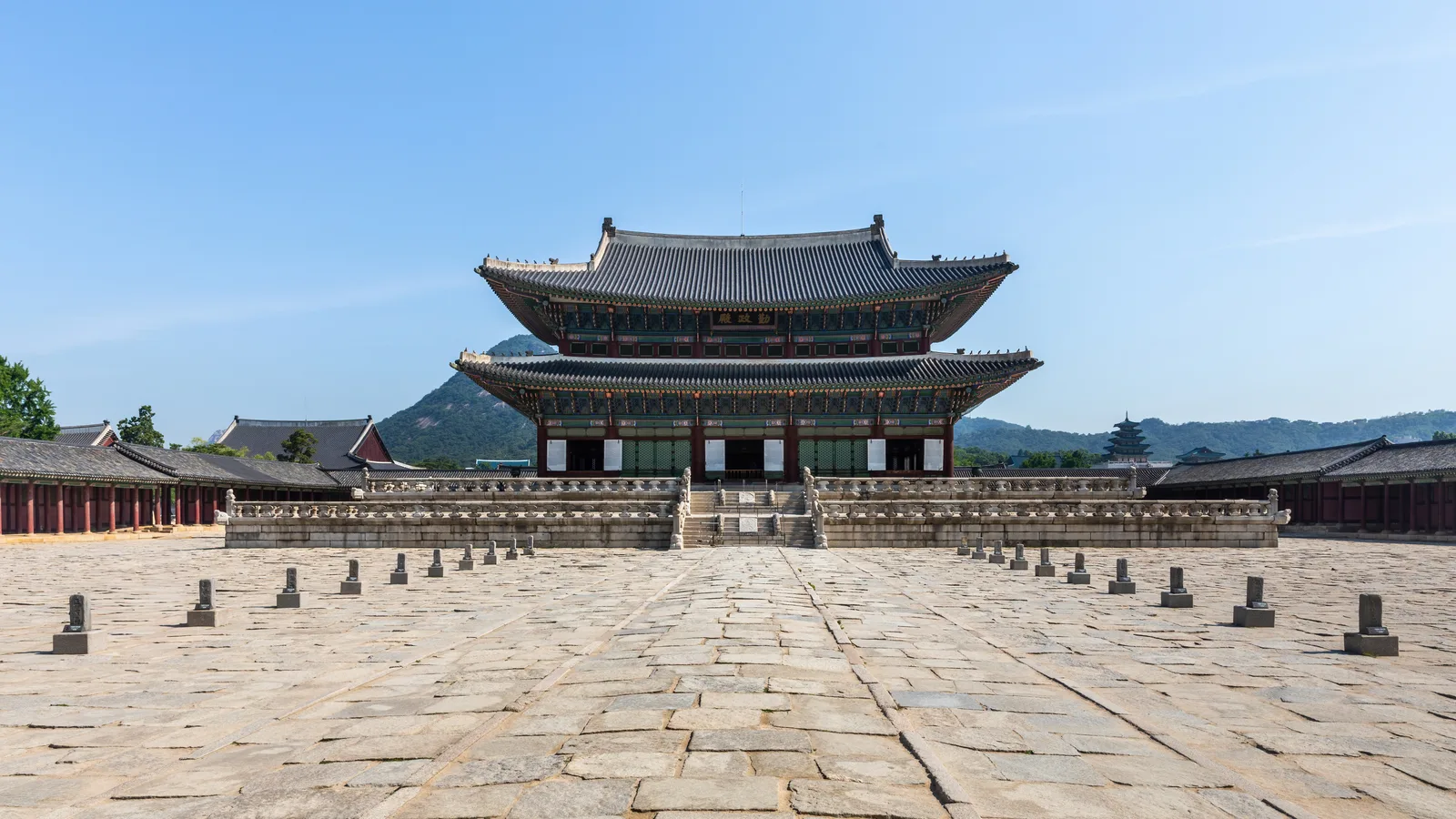
Begin with Gyeongbokgung if you want a frame for Seoul’s older landmarks. Established in 1395 as the main palace of the Joseon dynasty, it arranges gates, ceremonial courtyards and halls against a mountainous backdrop. Walk through the sequence slowly: the changing scale between an entrance and an audience hall helps explain how royal authority was expressed in architecture.
The complex has suffered destruction and undergone extensive reconstruction, including restoration projects since the 1990 s. Do not assume every building you see has survived unchanged from the fourteenth century. Read the on-site interpretation and leave time for the precinct beyond the first courtyard. Confirm current admission arrangements before setting out; ceremonies, special openings and access to individual buildings should be treated as separate possibilities, not guaranteed parts of a standard visit.
2. Changdeokgung: a palace shaped by its landscape
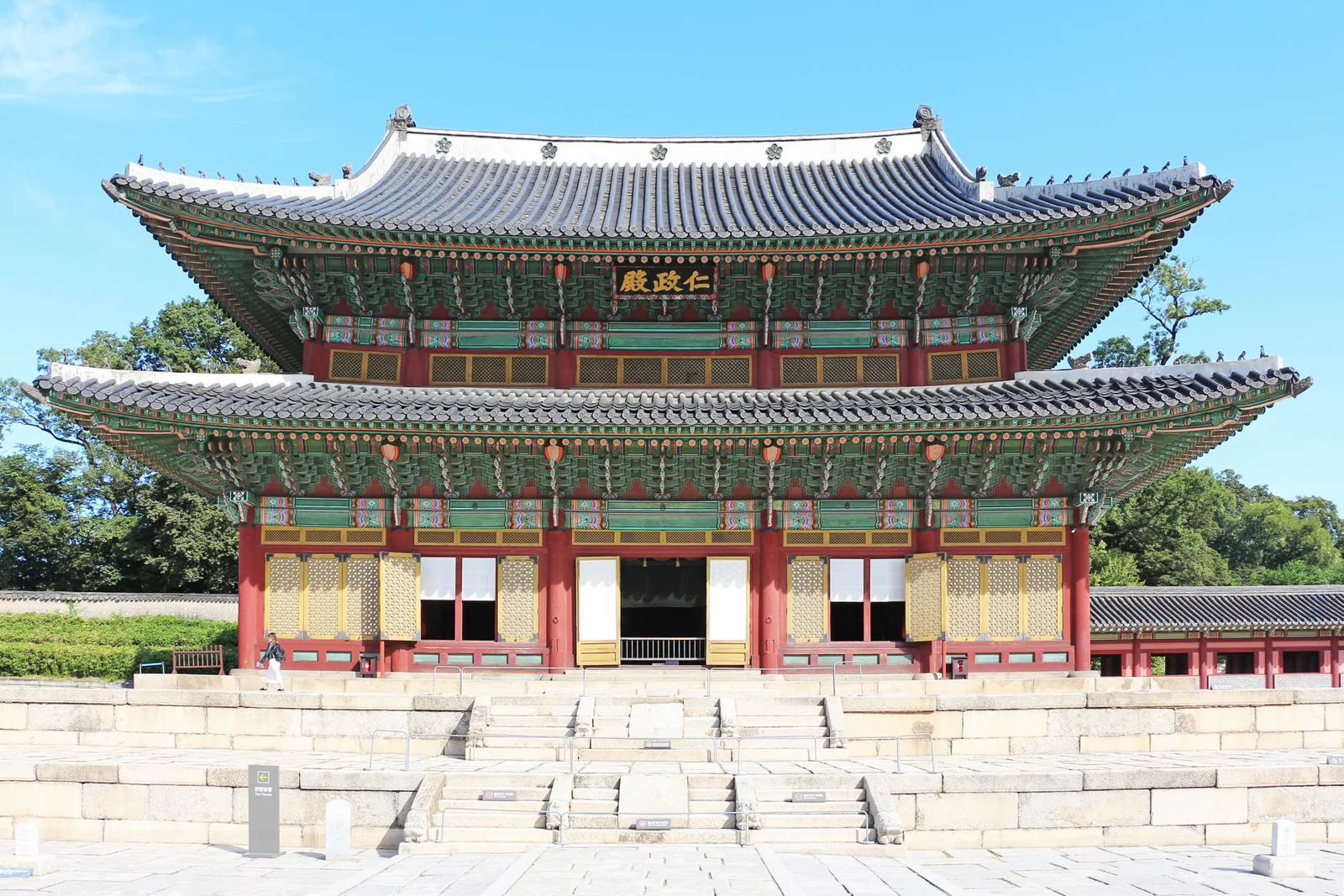
Changdeokgung offers a rewarding comparison with Gyeongbokgung. Built in 1405, this UNESCO-listed palace is known for the way its buildings relate to the surrounding terrain. Injeongjeon, the main hall, and the smaller spaces on the general visitor route show a different rhythm from the broad ceremonial approach of the first palace. Give those differences time to register instead of treating the two visits as interchangeable.
The Huwon, often called the Secret Garden, is a distinct visit with its own reservation arrangements. Check the official booking service if the garden is a priority; an ordinary palace ticket should not be assumed to secure a garden place. The tourism office lists a regular Monday closure, with schedules and exceptions requiring confirmation. A booked garden visit can anchor this day, with other sightseeing arranged around it.

3. Bukchon: hanok streets with residents at their centre
Between Gyeongbokgung and Changdeokgung, Bukchon preserves streets of hanok, the traditional Korean house. Rooflines and lanes make the district visually appealing, but its defining practical fact is that people live here. Unlike a purpose-built heritage attraction, this is a neighbourhood of homes alongside cultural venues, workshops and businesses. Choose a modest public-street walk and use the cultural centre for context rather than seeking access to private courtyards.
At the time of review, Visit Seoul specifies tourist visiting hours of 10:00–17:00 in the restricted red-zone areas; entry there is prohibited outside that window. Check the current boundary and notices before walking in. Keep your voice low, avoid loudspeakers and do not photograph inside houses even when doors are open. The official guidance asks groups to stay at 10 people or fewer. An early-morning photography trip is therefore not an appropriate recommendation for the restricted area.
4. Namsan Seoul Tower: seeing the city’s wider shape
Namsan gives Seoul a central elevated viewpoint, with the tower standing above the wooded hill and urban neighbourhoods. From a permitted viewing area, look for how the dense city opens around hills and the river instead of concentrating only on the skyline. The observation deck offers a higher panorama, but visibility depends on weather and air quality; a ticket cannot guarantee a clear horizon.
Decide separately how you will reach the hill and whether you want observatory admission. The cable car and observation deck are different services, so read the inclusions of any combined ticket carefully. Allow for queues and the last part of the approach, and check an accessible route if slopes or steps are a concern. Plan the return before staying for city lights, especially if you are relying on a particular transport connection.
5. Hanyangdoseong: a manageable stretch of the city wall
Hanyangdoseong follows the hills around Seoul’s historic core. Originally built in 1396, its 18.6-kilometre circuit connects the landscapes of Bugaksan, Naksan, Namsan and Inwangsan. That length is a reason to choose a section, rather than assume a complete circuit is a casual addition to a sightseeing day. Along the wall, the changing view makes the relationship between defensive boundaries and modern neighbourhoods tangible.
For a first visit, consider a section around Naksan and establish the entry point, exit and onward transport before leaving. Judge the actual route against your fitness: paths along a hill can involve gradients and stairs even when the map looks short. Wear suitable shoes, carry water and adjust plans for rain, heat or poor air quality. Follow current access signs and stay off the masonry; it is heritage, not a climbing platform.
6. Deoksugung: traditional halls and a modern royal chapter
Deoksugung, beside the City Hall area, brings another phase of Korean history into view. Traditional palace buildings coexist with Western-style architecture and gardens. Emperor Gojong expanded the complex from 1897, and buildings such as Seokjojeon belong to this later chapter. Looking at those contrasting forms helps distinguish this visit from the larger palaces to the north.
The stone-wall road outside offers a useful continuation after the grounds, without requiring another cross-city journey. Inside, distinguish ordinary admission from any separately managed exhibition or interior tour. The tourism listing gives Monday as the regular closing day; check holiday exceptions and current programmes. If you want to see a guard ceremony, verify its schedule independently and treat it as an addition, leaving the architecture and history as the substance of the visit.
7. Namsangol Hanok Village: comparing traditional homes
Namsangol brings together five Joseon-era hanok relocated from different parts of Seoul to the northern foot of Namsan. The houses represent different social backgrounds, from middle-class households to high-ranking officials and aristocratic families. That makes the visit useful for looking beyond a generic idea of the traditional house: compare room arrangements, courtyards and the scale of each property using the site’s explanations.
This is a managed cultural site, which makes it a more suitable place to explore domestic architecture than intruding into homes in Bukchon. Cultural activities and performances depend on the current programme, so do not assume a demonstration or wedding will occur during your visit. Chungmuro is the relevant transport hub. Check the listed Monday closure and allow a separate onward journey if combining the village with the summit of Namsan.
8. National Museum of Korea: objects that connect the story
The National Museum of Korea in Yongsan provides a wider historical perspective after the palace visits. Its collections range from prehistoric tools and gold crowns of the Three Kingdoms period to Goryeo celadon and Joseon painting. Instead of trying to absorb every room, choose a thread: ceramics, the imagery of royal power or the changing materials used in everyday objects.
Give the museum a substantial block of time and use its current gallery map to select two or three areas. This can be an especially useful alternative when an exposed walk no longer suits the weather. Ichon station serves the museum. Check exceptional and scheduled closures as well as any conditions for special exhibitions; a general description of the museum does not establish that every gallery or programme will be available on your date.
9. Starfield Library at COEX: reading inside the city’s bustle
At COEX Mall in Gangnam, Starfield Library turns a shared reading space into a striking urban interior. The large bookshelves attract photographers, but books, magazines and seats give the place a daily function beyond its appearance. Visit with time to pause and browse an available section, while leaving tables and circulation routes useful for people who came to read.
Make sure your map points to the COEX location in Seoul, not another Starfield library outside the city. The official listing identifies Samseong and Bongeunsa as nearby stations; choose the one that fits your starting point. A talk or performance may enrich a visit, but check the programme and language rather than assuming one will be running. This is a convenient indoor stop during a Gangnam outing, not a reason to spend an entire day crossing Seoul for one photograph.
10. Lotte World Tower: a different perspective from Jamsil
In Jamsil, Lotte World Tower rises 555 metres over the surrounding city. Its 123 floors include the Seoul Sky observation experience, while the larger complex contains shopping and other attractions. The tower shows a very different scale of Seoul from the old palace districts. It can be worth visiting for contemporary architecture even if you decide against a second paid observation deck after Namsan.
Choose what you actually want to do before buying: a tower view, an exhibition or another attraction in the complex may have separate admission and operating arrangements. Jamsil station serves the area, but allow time to find the correct entrance in a large development. If views are the priority, check visibility before committing. Do not confuse access to the mall with access to the observatory or assume that every venue closes at the same time.
Organising days without unnecessary crossings
Choose accommodation and transport routes together, using the actual station nearest your lodging. The palace area, Yongsan and the districts south of the river are separate outings, even if a map shows them at a similar scale. Save the names of your destination and the correct entrance before leaving; large complexes such as COEX and Lotte World have multiple approaches.
Make reservations for limited-access visits first, particularly the Secret Garden, then fit flexible stops around them. Avoid assigning all palace and cultural visits to a Monday: several sites in this selection list that day as their regular closure. For a walking day, consider both the weather and the air-quality forecast. If you need a step-free route, verify the entire journey, including station exits and the final approach, instead of relying on a single accessibility symbol.
A route to get you started
- Day 1: make Gyeongbokgung your main visit, then consider a short Bukchon walk only within the permitted hours and areas. Leave space for lunch and a break rather than booking a second major palace immediately afterwards.
- Day 2: visit Changdeokgung, arranging the day around a confirmed garden reservation if you have one. Choose a manageable Naksan wall section later, allowing for the transfer and sufficient daylight. Drop the walk if the palace visit uses your energy.
- Day 3: begin with Deoksugung, then move to Namsangol if both are open. Continue to Namsan only after checking the approach, weather and return transport; otherwise keep the hill for another afternoon.
- Day 4: give the National Museum of Korea a substantial visit. An afternoon at COEX can work if you still want an indoor outing, but keep it optional. Day 5 provides room for Jamsil and Lotte World Tower or for whichever visit you postponed. With only three days, choose your favourite clusters instead of trying to compress all ten places.
Good to know
Can I visit Bukchon very early to avoid crowds?
Not in the restricted red-zone areas: the official information reviewed limits tourist visits there to 10:00–17:00. Check current signs and boundaries, keep noise down and avoid photographing inside homes. A quieter photograph does not justify entering outside permitted hours.
Should I choose Namsan Tower or Lotte World Tower?
Choose Namsan for the central hill setting and Lotte World Tower for the Jamsil skyline and contemporary architecture. You do not need both observation decks. Check visibility, travel time and ticket inclusions, then use the saved time for a museum or neighbourhood that interests you.
Does palace admission include the Secret Garden?
Do not assume so. Changdeokgung’s general visit and Huwon garden visit have separate arrangements. Consult the official reservation service and secure the appropriate booking before building the rest of the day around the garden.
Which places suit a rainy day?
The National Museum of Korea and Starfield Library provide substantial indoor options, subject to current opening arrangements. Palace grounds, hill paths and the wall involve outdoor walking. Rearrange your days according to the actual forecast rather than forcing an exposed itinerary.
A first trip to Seoul works best when palace history, neighbourhood life and the modern city have room of their own. Group visits geographically, respect residential restrictions and choose viewpoints according to conditions. Seeing fewer places with a clear purpose is more rewarding than spending the trip travelling between ten rushed stops.
Sources consulted
- Royal Palaces and Tombs Center — Gyeongbokgung Palace and Its History —
- Visit Seoul — Changdeokgung Palace —
- Visit Seoul — Bukchon Hanok Village and visitor restrictions —
- Visit Seoul — Namsan Seoul Tower —
- Visit Seoul — Hanyangdoseong, Seoul City Wall —
- Visit Seoul — Deoksugung Palace —
- Visit Seoul — Namsangol Hanok Village —
- Visit Seoul — National Museum of Korea —
- Visit Seoul — Starfield Library at COEX —
- Visit Seoul — Lotte World Tower —